Designing the analytics layer
for data informed decision making.
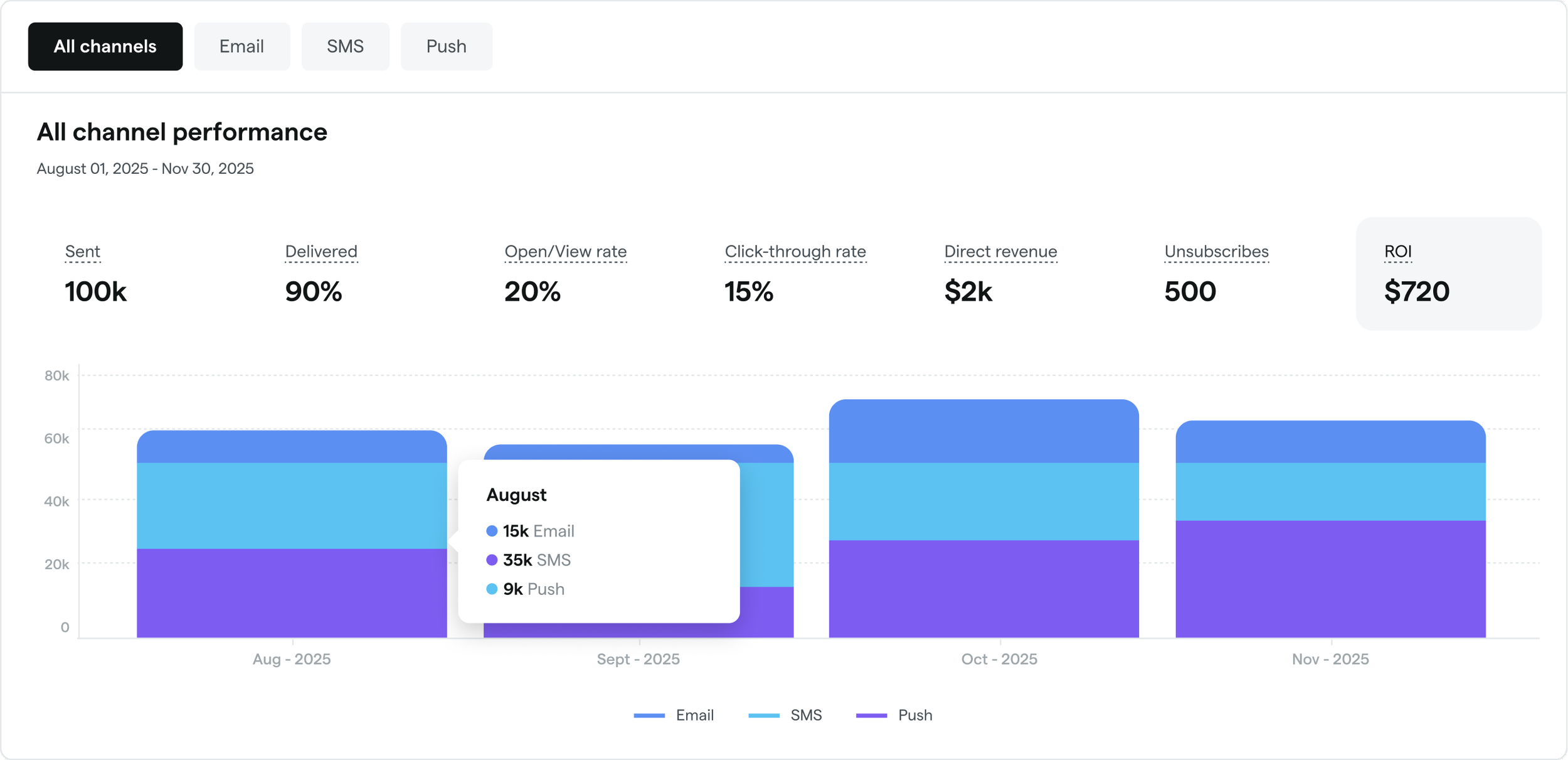
Dutchie's Loyalty & Marketing reporting unified loyalty, retention, workflow, and omnichannel performance into a single strategic experience inside Dutchie Backoffice — designed to help retailers move from fragmented exports to operational intelligence.
Role: Lead Product Designer, end-to-end ownership
Platform: Web app — Dutchie Backoffice, Loyalty + Marketing suite
Timeline: MVP + Phase 2, Multi-quarter arc
Outcome: Loyalty liability launched, Omnichannel reporting live
Mature workflows.
Fragmented reporting.
Retail marketers lacked a centralized way to understand overall performance, measure loyalty ROI, or connect marketing activity to customer value over time.
Reporting trapped inside
individual workflows.
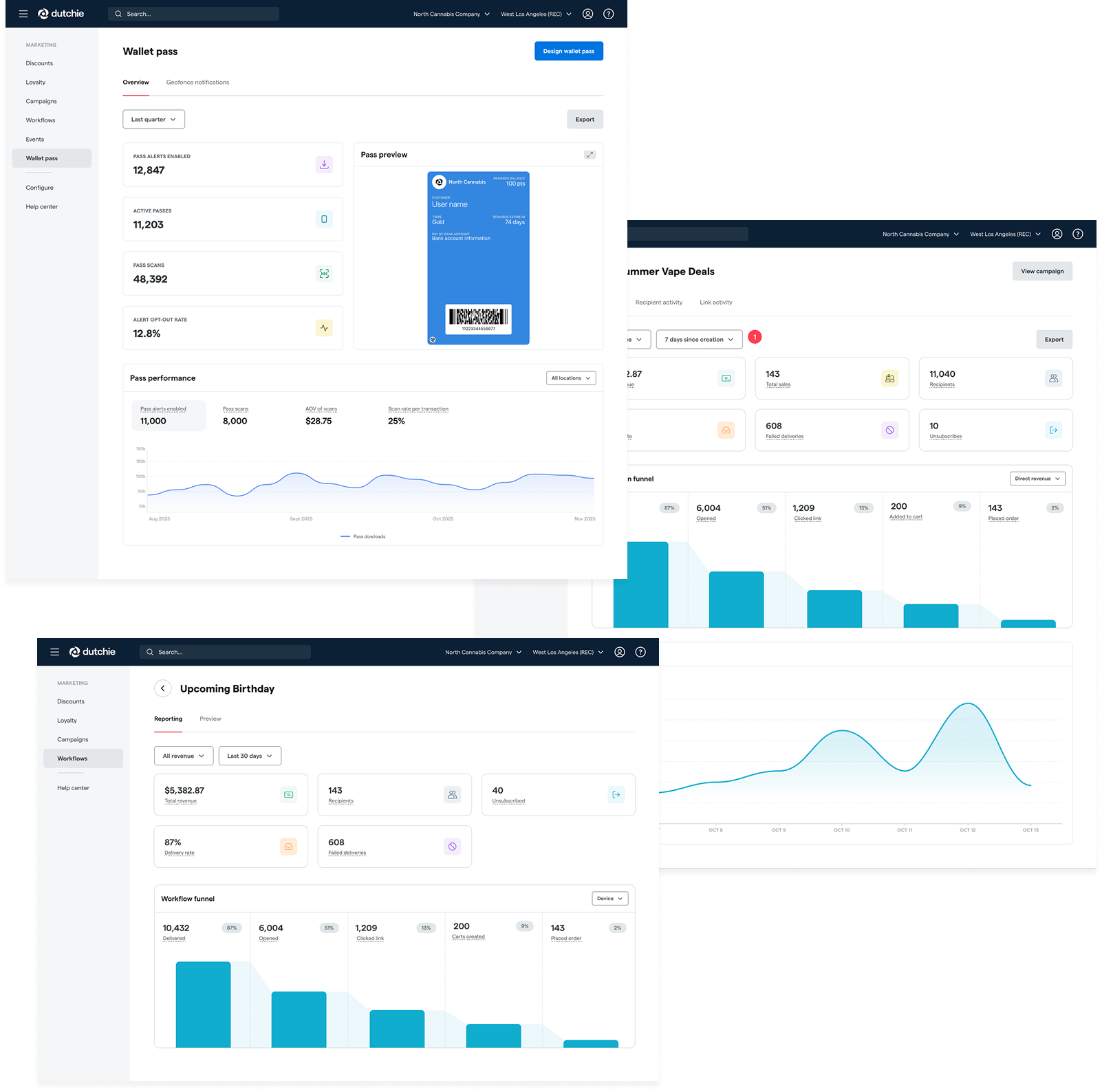
Before this project, reporting was distributed across individual campaigns, workflow-level analytics, disconnected loyalty metrics, and operational exports. Retailers could see isolated metrics, but couldn't understand how their overall marketing strategy impacted revenue, retention, or loyalty growth.
the problem
No centralized marketing performance view
Limited visibility into loyalty ROI
Difficulties comparing channels and campaigns
Heavy reliance on manual exports and spreadsheets
Inconsistent visibility across ecommerce and retail
Not more charts —
better questions.
We spent nearly three months in weekly conversations with retailers — conducting research, validating concepts, and testing reporting workflows. One thing became clear quickly: every team used data differently. Some operators wanted quick performance snapshots, while others needed deep drilldowns into campaign attribution, loyalty behavior, and ecommerce conversion trends. The challenge was designing a dashboard framework flexible enough to support a wide range of use cases without overwhelming users with complexity.
Which campaigns actually drive retention?
Are loyalty customers more valuable over time?
Where are customers dropping off?
Which channels create the best ROI?
How should retailers manage rewards liability?
Translating loyalty mechanics
into business outcomes.
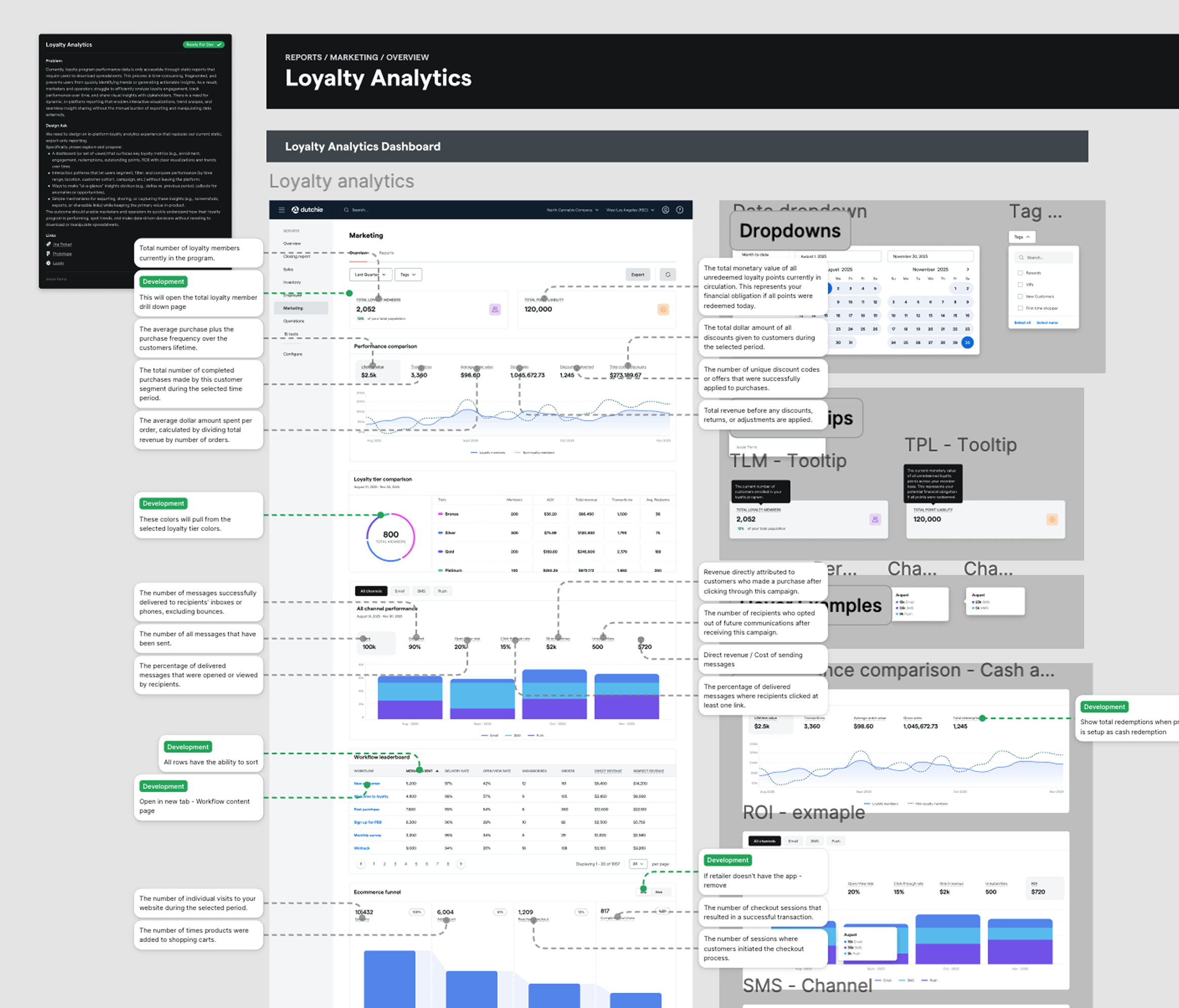
A major part of the work involved partnering closely with engineering to define what data could realistically and reliably be returned at scale. Together, we worked through attribution logic, reporting constraints, data reliability, and the complexity of surfacing metrics consistently across loyalty and ecommerce systems.
This collaboration helped shape a liability reporting framework that turned complex loyalty mechanics into something retailers could use for real operational and marketing decisions.
Translating loyalty mechanics
into business outcomes.
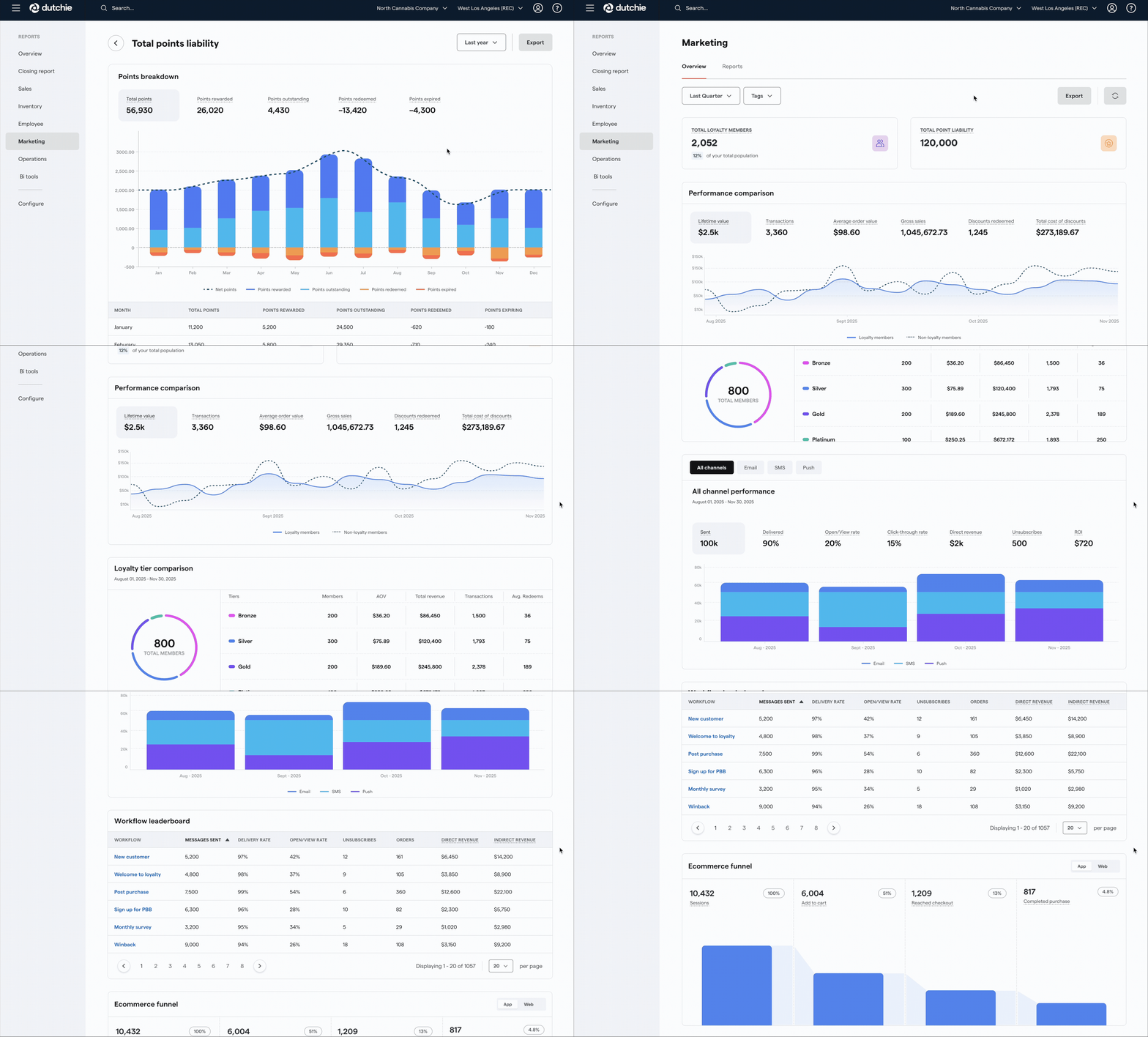
A foundational analytics layer.
After launch, retailers responded strongly to the reporting experience and consistently asked for deeper channel insights and more operational visibility across marketing performance.
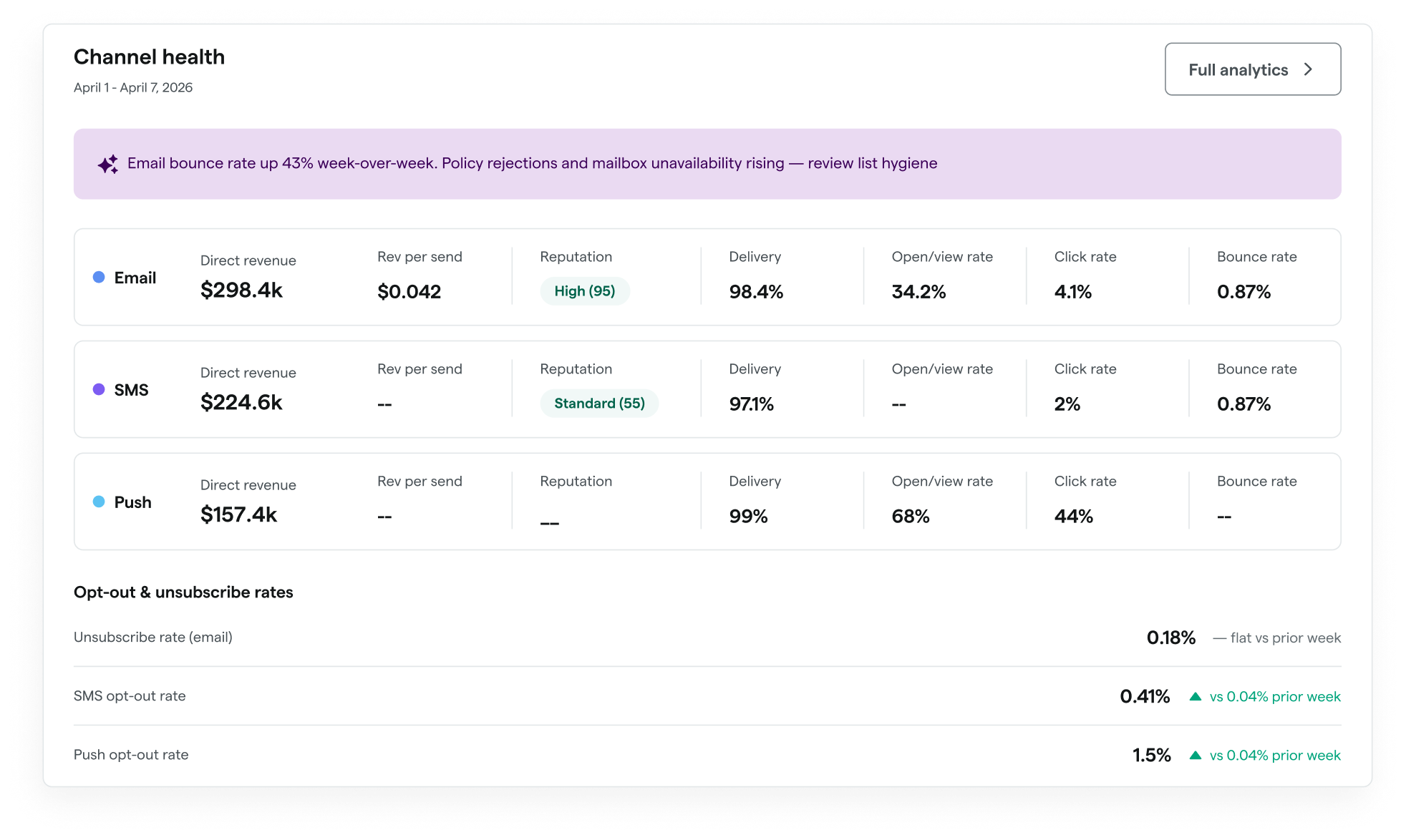
That feedback directly shaped the next phase of the platform: channel health overviews, deeper analytics drilldowns, and expanded reporting capabilities made possible through new engineering investments in channel-level data infrastructure.
We also began introducing AI-powered insights to help surface meaningful trends and opportunities without requiring retailers to manually interpret every metric themselves.
other projects